Most parents assume the dentist comes later, maybe around age three or four, once their child has a full set of teeth and can sit still in a chair. But that wait is longer than it needs to be, and in some cases, it can allow small problems to grow into bigger ones. If you have a baby with a first tooth coming in and you are wondering whether it is too soon to call, the answer is almost certainly no.
See Me Smile Dental and Orthodontics is the kind of place where that question gets a clear, calm answer without any pressure attached. Families come in from across the Santa Barbara area at every stage of their child's development, from that very first tooth through the teen years, and the team is genuinely comfortable working with little ones who have never sat in a dental chair before.
Keep reading to learn the right age to schedule your child's first visit, why baby teeth need professional care even before problems appear, what a first appointment actually looks like, and how to prepare your child so the experience feels easy rather than scary. You will leave this article with a clear sense of your next step and the confidence to take it.
The Right Age to Schedule That First Visit
The answer is simpler than most parents expect: your child should see a dentist by their first birthday, or within six months of their first tooth appearing, whichever comes first. That timeline comes from both the American Academy of Pediatric Dentistry and the American Dental Association, and it holds whether your baby has one tooth or several.
Why Age One Matters
At twelve months, your child's mouth is already developing in ways that a dentist can assess and guide. Even a single baby tooth can develop a cavity, and early visits give a dentist the chance to spot risk factors before they turn into decay. The visit is also a way for parents to ask questions about feeding habits, pacifier use, thumb-sucking, and how to properly clean those first small teeth.
Starting this early also shapes how your child thinks about dental care for the rest of their life. A child who visits the dentist at one year old learns that the office is a familiar, comfortable place, which makes subsequent visits easier.
What Counts as Early Enough
Some parents wait until age two or three, and while that is better than not going at all, it means missing a window when guidance and prevention matter most. The first tooth usually appears between six and ten months, so the six-month rule means many babies should have their first appointment before their first birthday.
Child's Age at First Tooth | Recommended First Visit |
4 to 6 months | By 10 to 12 months |
7 to 9 months | Within 6 months of first tooth |
10 to 12 months | As soon as possible, by age 1 |
After 12 months | Schedule immediately |
If your child is already past age one and has not yet seen a dentist, the right move is to book that appointment now rather than waiting for a problem to show up. Once you understand the timeline, the next question most parents have is: what exactly do baby teeth need to be protected for?
Why Early Checkups Matter for Baby Teeth
Baby teeth are temporary, but they are far from unimportant. Early dental checkups protect those teeth and the development that depends on them.
How Primary Teeth Support Development
Primary teeth, the ones your child will have from infancy through roughly age twelve, do several important jobs at once. They help your child chew food properly, which supports nutrition during critical growth years. They hold space in the jaw for permanent teeth that are forming underneath the gumline. They also support speech development, helping your child form sounds and words correctly.
When a baby tooth is lost too early due to decay or damage, the surrounding teeth can shift and close the space that would otherwise be filled by a permanent tooth. That kind of crowding often leads to alignment issues later, sometimes requiring orthodontic care that could have been prevented or reduced with earlier attention.
How Prevention Starts Before Problems Show
Tooth decay is one of the most common chronic childhood conditions in the United States, and it can affect teeth as soon as they appear. Decay often starts without any visible signs that a parent would notice at home. A dentist can spot early demineralization, apply fluoride varnish to strengthen enamel, and catch soft spots before they become cavities.
Here is what an early preventive visit typically addresses:
Checking for early signs of decay on all erupted teeth
Applying fluoride varnish to strengthen developing enamel
Reviewing infant and toddler feeding habits, including bottle use at bedtime
Discussing how and when to introduce a soft-bristled toothbrush
Talking through pacifier and finger-sucking habits and their effects on bite development
Answering parent questions about teething discomfort and what is normal
Prevention at this stage is genuinely simple and low-cost compared to treating a cavity in a toddler. Knowing what the visit protects against naturally leads to the next question: what does that first appointment actually look like when you walk in?
What Happens at an Early Childhood Appointment
A first dental visit for a baby or toddler is shorter and gentler than most parents imagine. It is not a full adult-style cleaning, and it is not meant to intimidate anyone in the room.
What Parents Can Expect in the Room
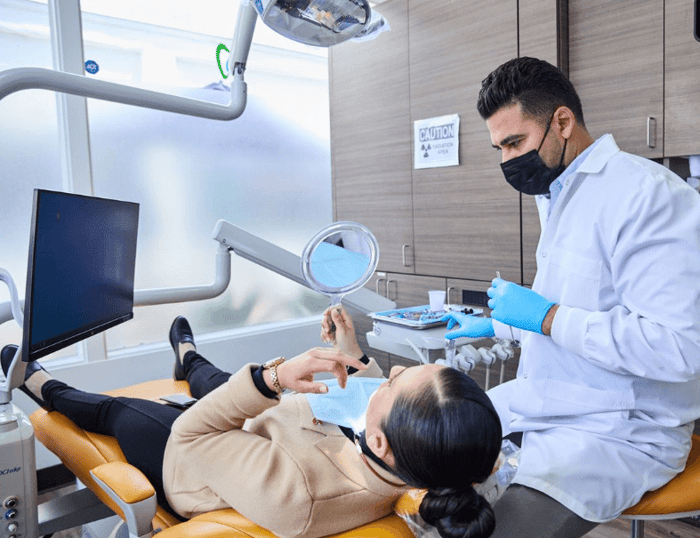
A first visit typically lasts between 30 and 45 minutes from check-in to check-out. For very young children, the dentist often does what is called a "knee-to-knee" exam, where you sit facing the dentist, and your child lies back with their head in the dentist's lap and their feet in yours. This keeps your child close to you while giving the dentist a clear look inside the mouth.
The dentist will check all erupted teeth for early decay, examine the gums and soft tissues, assess jaw development, and apply fluoride varnish if appropriate. You will also have time to ask questions about home care, diet, and anything you have noticed about your child's teeth or bite. The visit is as much a parent education session as it is a checkup.
How Dentists Help Young Kids Feel Comfortable
Pediatric-friendly dental teams use language and pacing that makes sense for small children. Instead of clinical words, they might call the water spray "the squirt gun" or the suction tool "the tiny vacuum." Slow, narrated movements replace sudden actions. A child who does not know what is coming next is more likely to become upset.
At a Santa Barbara appointment, the goal is always to end on a positive note, even if a very young child cries or fusses during part of the exam. Keeping the experience gentle and brief means your child leaves without a bad memory attached to the dental chair.
That positive association is something they will carry into every future visit. Once you know what to expect in the room, the next step is helping your child feel ready before you arrive.
How to Prepare Your Child for a Positive Experience
A little preparation at home goes a long way toward making a first dental visit feel familiar rather than frightening. The goal is to build calm curiosity, not to over-explain or create anticipation anxiety.
Simple Ways to Talk About the Visit
Use simple, positive language when you mention the appointment. Say something like, "The dentist is going to count your teeth and make sure they are strong." Avoid phrases like "it won't hurt" because that introduces the idea of pain before your child has thought of it.
Reading a picture book about a dental visit can help a toddler or preschooler visualize what to expect. Pretending to be the dentist at home, looking in each other's mouths with a flashlight and counting teeth, is a low-stakes way to make the chair feel less foreign. Keep the tone matter-of-fact and cheerful rather than overly reassuring, which can accidentally signal that there is something to be nervous about.
What to Bring and When to Arrive
Arriving a few minutes early gives your child time to settle into the waiting room without feeling rushed. Bring anything that helps your child feel secure, such as a favorite small toy or a pacifier for very young children.
Insurance card and any prior dental or medical records (for new patients)
A completed patient form if the practice offers online intake ahead of the visit
Your child's favorite small comfort item, such as a stuffed animal or toy
A snack for after the visit to celebrate, not during, since a clean mouth before the exam matters
A list of any questions you want to ask the dentist about home care, teething, or habits
Plan the appointment for a time when your child is typically well-rested and in a good mood. A mid-morning slot often works well for toddlers who nap in the afternoon. After you know how to arrive prepared, it helps to understand how dental care evolves as your child grows.
How Ongoing Dental Care Changes as Kids Grow
The first appointment is the starting point, not a one-time event. Dental care shifts in focus and frequency as your child moves through different developmental stages.
Visit Timing After the First Appointment
After the first visit, most children should return every six months for a routine checkup and cleaning. Some children with a higher risk of decay may benefit from visits every three to four months, which a dentist can recommend based on what they find at each appointment.
Age Range | Typical Visit Focus |
12 to 24 months | Exam, fluoride varnish, parent guidance |
2 to 3 years | First gentle cleaning, habit assessment |
4 to 6 years | X-rays introduced, sealant discussion begins |
7 to 10 years | Permanent teeth monitored, bite evaluated |
11 to 13 years | Orthodontic assessment, cavity prevention |
14 and older | Wisdom tooth monitoring, continued prevention |
Each stage adds new layers of care without reinventing the routine your child already knows.
The Value of One Family Practice Over Time
When your child sees the same dental team from age one through their teen years, that team builds a detailed picture of how your child's teeth develop. They notice patterns, track changes over time, and can flag concerns early because they have a baseline to compare against. That continuity also means your child never has to get used to a new environment or a new face.
A family practice that treats both adults and children means you can often schedule your own appointment alongside your child's, which simplifies life considerably for busy parents managing multiple schedules. That kind of practical convenience is worth considering when you decide where to establish care for your family.
Making Dental Visits Work for Busy Santa Barbara Families
Scheduling dental care around school, work, and weekend activities is a real barrier families face, and it is worth knowing your options before those appointments keep getting pushed back.
Why Saturday Appointments Help
For families where both parents work or where kids are in school five days a week, a Saturday appointment slot removes a significant obstacle. Instead of pulling your child out of school or arranging coverage at work, you can treat the dental visit like any other Saturday errand and keep the week intact.
Saturday availability also tends to mean a lower-stress experience for kids. They are not tired from a school day, and the appointment does not feel like it is interrupting something they would rather be doing. Many families find they are more consistent about keeping up with six-month checkups when weekend scheduling is an option.
Frequently Asked Questions
What's the Best Age for a Child's Very First Dental Checkup?
The recommended starting point is by age one or within six months of the first tooth appearing, whichever comes first. This timeline is set by the American Academy of Pediatric Dentistry and applies to all children, regardless of how many teeth they have at that point.
Should My Toddler See the Dentist Even if They Only Have a Few Teeth?
Yes, a few teeth still need professional care. Even a single baby tooth can develop decay, and a dentist can apply protective fluoride varnish and provide guidance on home care that can make a real difference at this early stage.
How Often Should Babies and Toddlers Have Dental Visits Once They Start?
Most young children should visit every six months after the first appointment. A dentist may recommend more frequent visits if there is a higher risk of cavities, but twice a year is the standard starting point for most healthy children.
Can I Bring My Baby to My Dental Appointment in Santa Barbara?
This depends on the practice and the nature of your appointment. A family dental practice that treats all ages is often the most flexible option, and it is worth calling ahead to ask about bringing an infant or toddler along for your visit.
Is It Normal for a 3-Year-Old to Need a Filling, and Is It Safe?
Yes, cavities in toddlers and preschoolers are more common than most parents expect. Treating decay in a baby tooth is safe and important because untreated cavities can cause pain, infection, and early tooth loss, which can affect jaw development. A dentist will choose an approach that is appropriate for your child's age and comfort level.
What Should I Expect at My Child's First Dental Visit to Help It Feel Calm and Easy?
The first visit is gentle and short, usually under forty-five minutes. A dentist will examine your child's teeth, apply fluoride if appropriate, and spend time talking with you about home care. Arriving rested, bringing a comfort item, and using calm, positive language at home in advance all help the experience go smoothly.
Your Child's First Dental Visit Is Closer Than You Think
The good news is that starting your child's dental care does not require a problem to prompt it. A first visit at age one, or soon after the first tooth appears, sets a healthy pattern that makes every subsequent appointment easier and more familiar. Baby teeth, small as they are, play a real role in your child's development, and early care protects that role.
If you are a Santa Barbara parent who is ready to check this off the list, or if you simply want to ask a few questions before booking, the team at See Me Smile Dental and Orthodontics is easy to reach and genuinely happy to help you figure out the right next step for your child's age and situation. Saturday appointments are available for families who need a flexible scheduling option.
Call the office or submit an appointment request online to get your child's first visit scheduled. One short appointment now can make dental care feel normal and comfortable for your child for years to come.