Missing most or all of your teeth can make everyday life feel frustrating. Eating certain foods becomes difficult, speaking may feel awkward, and your confidence can take a hit. If you've been searching for a dentist in Santa Barbara to restore function, understanding how All-on-4 implants support daily function and stability can help you move forward with clarity.
At See Me Smile Dental & Orthodontics, we focus on helping you regain comfort and confidence with a gentle, modern approach to care. You'll find solutions tailored to your daily needs, powered by advanced technology and a family-focused environment that helps you feel at ease.
In this guide, you'll learn how All-on-4 implants work, why they feel stable, and how they improve your ability to eat and speak. You'll also see what to expect during treatment and how to protect your results long term.
How All-On-4 Implants Create Everyday Stability
The All-on-4 concept uses a specific implant arrangement that maximizes contact with your jawbone. Four titanium implants work together to support a fixed full-arch prosthesis, giving you a complete set of teeth that stay put during meals, conversations, and whatever else your day throws at you.
Why Four Implants Can Support a Full Arch
It might sound strange that just four dental implants can support a whole arch of 10 to 14 teeth. The trick is all in the placement.
Each implant gets positioned in an area of the jaw with naturally higher bone density. When the implants are connected by a fixed bridge, they create a unified structure that spreads biting forces across the entire arch.
Think of it like the legs of a table—four well-placed supports can hold a lot of weight if you set them up right. Fewer surgical sites also means recovery isn't as complicated.
The Role of Anterior and Posterior Implant Positioning
Two anterior implants go vertically near the front of the jaw, where the bone is denser. The other two, the posterior implants, are placed toward the back at an angle.
This split creates a wide, sturdy base. The front ones handle direct biting forces, while the angled back implants give extra support along the arch, often without needing bone grafting.
How Tilted Implants Improve Force Distribution
The tilted implants really set the All-on-4 system apart. Angled at about 30 to 45 degrees, these implants grip longer sections of bone and avoid sensitive areas like the sinus cavity or nerve canal.
Angling the implants spreads chewing forces over a bigger surface area. That means less stress at any one point and better overall stability. Many people who'd otherwise need bone grafting can skip it, thanks to this approach.
What a Fixed Bridge Changes in Daily Life
A fixed bridge attached to All-on-4 implants doesn't come out at night. No adhesives, no soaking. You brush your teeth almost like you would with natural ones.
The benefits go way beyond just chewing—this prosthesis gives your lips support, so your face keeps its shape and doesn't get that sunken look. Eating steak, biting into apples, and laughing out loud can actually feel normal again.
What Patients Can Expect During Treatment
The All-on-4 treatment follows a pretty clear sequence. From the first scan to walking out with new teeth, each step is meant to be efficient and predictable. Most patients get a provisional bridge the same day as the implant surgery.
Digital Planning and CBCT-Based Evaluation
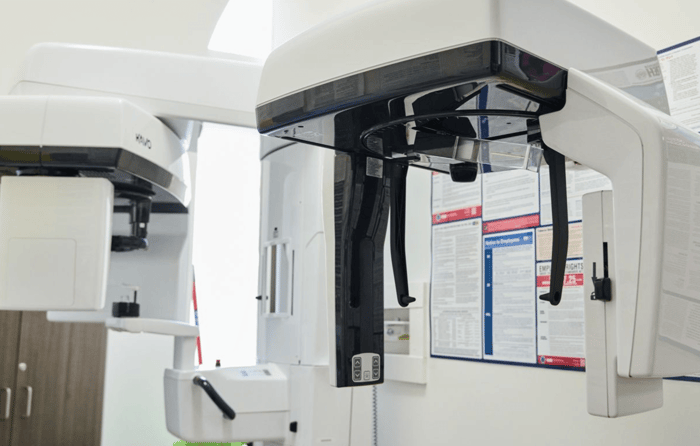
Your treatment starts with a CBCT scan—a 3D X-ray of your jaw. This scan shows bone density, bone volume, nerve locations, and sinus proximity in crazy detail.
Your dental team uses this data to plan exactly where each implant will go, down to the angle. They'll often create a surgical guide to ensure precise placement. This digital blueprint takes out a lot of guesswork.
Implant Placement and the Surgical Phase
On the day of surgery, any remaining teeth are removed if needed. The jawbone gets prepped, and the surgical guide helps place the four titanium implants.
Two go in vertically at the front, and two go in at an angle toward the back. The whole thing usually takes a few hours, depending on whether you're doing one or both arches. Local anesthesia or sedation keeps you comfortable throughout. No need to tough it out.
Immediate Loading With a Provisional Bridge
One of the best parts of the All-on-4 process is immediate loading. After the implants go in, abutments are connected, and a provisional bridge is attached right away.
Usually made from acrylic, this provisional bridge spreads biting forces evenly and protects the surgical sites. You leave with a full set of teeth with no awkward gaps. The provisional bridge stays put during healing, which takes about three to six months.
When Bone Grafting May or May Not Be Needed
A big perk of All-on-4 is that bone grafting is often unnecessary. Those tilted back implants reach denser bone areas that straight implants might miss.
Some folks with severe bone loss might still need grafting for stability. The CBCT scan will show if your bone volume is enough. In many cases, the strategic placement is all you need.
How Function Improves After Surgery
Functional improvement happens in stages. Early on, you'll adjust to a soft diet and get used to new sensations. Over the next few months, chewing strength, speech clarity, and facial support will continue to improve as you heal.
Chewing Strength and Food Choices During Healing
For the first week after surgery, stick with liquids—broths and smoothies are your friends. Weeks two through six, go for soft foods like yogurt, scrambled eggs, and mashed potatoes.
After about six weeks, start adding firmer foods back in. By the time you get your final prosthesis, most people are eating a wide range of foods with confidence.
The fixed full-arch prosthesis doesn't budge under pressure, so biting and chewing feel way closer to having natural teeth.
Speech, Comfort, and Confidence With Fixed Teeth
Dentures often come with slurred speech or clicking sounds. A fixed full-arch restoration doesn't move, so those issues pretty much disappear.
Your tongue and lips adapt to the new teeth within a couple of weeks. Speaking clearly gets easier as you go. Most people notice a real boost in confidence, especially in social situations.
Osseointegration and the Transition to Long-Term Support
Osseointegration is the process by which your jawbone fuses with the titanium implants. This process takes three to six months and is the key to long-term stability.
Follow your aftercare instructions closely during this time. Don't put too much force on the provisional bridge.
Once osseointegration is complete, your provisional bridge is replaced with a stronger, permanent prosthesis, usually made from zirconia or high-strength acrylic.
Bone Preservation and Changes in Facial Structure
Missing teeth cause your jawbone to shrink through bone resorption. That's what leads to the sunken or aged look over time.
All-on-4 implants help slow this down. The titanium implants stimulate bone during chewing, encouraging preservation.
Along with the lip support from the prosthesis, this treatment helps keep your face looking fuller and more natural.
Daily Cleaning and Maintenance Habits
Keeping your All-on-4 prosthesis clean is crucial for long-term success. Since you can't remove the fixed full-arch prosthesis at home, you'll need specific tools and habits to clean around and underneath it. A consistent routine protects both the prosthetic arch and the gum tissue around each implant.
Tools That Help Clean Under the Prosthesis
The prosthesis sits close to your gums, so food and bacteria can collect underneath. Standard brushing just doesn't reach those spots.
Here's what works best:
Oral irrigator (water flosser): Flushes debris from under the bridge with a targeted stream of water.
Interdental brushes: Small, flexible brushes that fit between the prosthesis and gum line.
Floss threader or implant-specific floss: Lets you thread floss underneath the bridge to reach tough areas.
Soft-bristled toothbrush: Gentle enough to clean the prosthesis surface without scratching it.
A Simple Home Care Routine for Fixed Full-Arch Restorations
Twice a day is a good baseline. In the morning and before bed, brush the whole prosthesis with a soft-bristled brush and non-abrasive toothpaste.
After brushing, use an oral irrigator to flush under the bridge. Then, use interdental brushes or a floss threader to clean where the prosthesis meets your gums. This routine takes about five to seven minutes. It's worth it for a healthy mouth.
Why Professional Maintenance Visits Matter
Even with great home care, professional cleanings are necessary. Most dental teams recommend visits every three to six months for All-on-4 patients.
During these visits, the prosthesis may be temporarily removed so the team can deep-clean the implant abutments and inspect the tissue underneath. They'll also check for signs of wear, loosening, or early peri-implant issues.
Catching little problems early is way easier—and less expensive—than dealing with major complications later.
How Good Hygiene Protects Peri-Implant Tissue
The soft tissue around each implant—peri-implant tissue—needs steady care to stay healthy. If plaque builds up around the implants, inflammation can set in and lead to bigger issues.
Good daily hygiene keeps bacteria in check and supports healthy blood flow to the tissue. Honestly, it's one of the most important things you can do to protect your All-on-4 implants for the long haul.
Risks, Complications, and Warning Signs
Like any surgery, All-on-4 implants come with risks. Most complications are preventable with good planning, proper aftercare, and regular checkups. Knowing what to watch for helps you act quickly if something feels off.
Peri-Implantitis and Other Peri-Implant Disease Concerns
Peri-implantitis is an infection that affects the tissue and bone around a dental implant. It starts as inflammation of the soft tissue—peri-implant mucositis—and can progress to bone loss if you ignore it.
Signs include:
Red or swollen gums around an implant.
Bleeding when brushing or flossing near the implant.
A persistent bad taste or odor.
Peri-implant disease is the most common biological complication with All-on-4 implants, but you can usually prevent it with consistent oral hygiene and professional maintenance.
Mechanical Issues Such as Screw Loosening
The prosthesis attaches to the implants with tiny screws. Over time, those screws can loosen due to regular wear or from biting too hard.
Screw loosening isn't an emergency, but don't ignore it. If you notice wobbling, clicking, or a change in your bite, contact your dental team. Tightening or replacing the screw is a straightforward fix if you catch it early.
Signs of Infection Around Implants
Infection can pop up during early healing or even later on. Watch out for:
Increasing pain or tenderness near an implant site.
Swelling that doesn't improve after the first few days.
Pus or discharge around the gum line.
A low-grade fever in the days after surgery.
If you spot any of these, reach out to your dental provider right away. Early treatment usually involves antibiotics and a professional cleaning and can resolve the issue before it affects implant stability.
What Can Increase the Risk of Implant Failure
Implant failure happens in about 5 to 10 percent of dental implant cases.
A few things can increase your risk:
Smoking: It reduces blood flow to your bone and gums, which slows healing and affects how well the implant bonds.
Uncontrolled diabetes: This condition affects your body's ability to heal after surgery.
Poor oral hygiene: Bacteria buildup around the implant can harm the surrounding tissue.
Teeth grinding (bruxism): Extra force on the implants and prosthesis can reduce longevity.
Skipping follow-up visits: Missing appointments makes it harder to catch problems early.
If you address these factors before and after surgery, your All-on-4 implants have a much better chance of lasting long term.
Your Everyday Comfort and Stability Matter
When you restore your smile with All-on-4 implants, you're not just replacing teeth; you're rebuilding how you eat, speak, and move through your day. A stable, fixed solution helps you enjoy meals more easily, speak with clarity, and feel more like yourself again.
At See Me Smile Dental & Orthodontics, we use modern tools and a thoughtful approach to help you achieve long-term comfort and function. Your treatment is designed to support your daily routine, so your smile feels secure and natural in real life.
If you're ready to improve how your smile functions every day, request an appointment and take the next step toward lasting stability and confidence.
Frequently Asked Questions
How do All-on-4 implants improve daily function?
All-on-4 implants restore your ability to eat, speak, and smile with stability. The fixed full-arch prosthesis stays securely in place, so you don't deal with slipping or movement during daily activities. This makes everyday tasks feel more natural and comfortable.
How stable are All-on-4 implants compared to dentures?
All-on-4 implants feel much more stable than traditional dentures because they anchor directly into your jawbone. You won't need adhesives, and the prosthesis doesn't shift while eating or talking. This added stability helps you feel more confident throughout the day.
What foods can you eat with All-on-4 implants?
You can gradually return to a wide range of foods as your implants heal. After the healing phase, most people comfortably eat foods like meats, vegetables, and fruits without worry. The fixed design supports stronger biting and chewing compared to removable options.
How long does it take to adjust to All-on-4 implants?
Most people adjust to All-on-4 implants within a few weeks. Your speech and bite improve as your mouth adapts to the new prosthesis. Over time, the implants feel more like natural teeth in your daily routine.
Do All-on-4 implants require special cleaning?
Yes, you'll need to use tools like a water flosser, interdental brushes, and a soft toothbrush to clean around the prosthesis. This routine helps remove debris from areas a regular toothbrush can't reach. Consistent care supports long-term stability and gum health.
How long do All-on-4 implants last with proper care?
With good oral hygiene and regular dental visits, All-on-4 implants can last many years. The implants themselves are designed for long-term support, while the prosthesis may need maintenance over time. Healthy habits play a key role in how long your results last.
Who is a good candidate for All-on-4 implants?
Many people missing most or all of their teeth qualify for All-on-4 implants, even with some bone loss. A detailed evaluation helps determine if your bone structure can support the implants. If you're considering your options, schedule your visit online to learn how this solution can support your daily function and stability.