The choice between conventional dentures and dental implants comes down to more than price; it involves your jaw health, your daily routines, and how you want your smile to feel years from now.
For patients in the Santa Barbara area who are ready to have that conversation in a comfortable, judgment-free setting, See Me Smile Dental and Orthodontics is a natural starting point. The team there takes time to walk through your specific situation rather than recommending one-size-fits-all solutions.
Keep reading to learn how each option works, how they compare on comfort, bone health, and upkeep, and what real costs look like over time. By the end, you will have enough clarity to walk into a consultation feeling informed rather than overwhelmed.
How Each Tooth Replacement Option Works
There are three main paths when replacing missing teeth: traditional dentures, single dental implants, and implant-supported dentures. Each one uses a different structure to restore your smile, and knowing how they work makes the rest of the comparison much easier to follow.
Traditional Full and Partial Dentures
Traditional dentures are removable appliances made of acrylic or a combination of acrylic and metal. A full denture replaces an entire arch of teeth (top or bottom), while a partial denture fills in gaps when some natural teeth remain. Partial dentures typically use metal clasps or precision attachments to grip surrounding teeth for stability.
Dentures rest on your gum tissue and, in the case of uppers, create a suction seal against the roof of your mouth. They do not attach to the jawbone at all. Adhesive pastes or powders can help with fit, but they are not a permanent fix. The process of getting dentures usually takes several appointments for impressions, fittings, and adjustments, which most patients can complete within a few weeks.
Single Dental Implants
A single dental implant is a small titanium post placed directly into the jawbone. Over a few months, the post fuses with the surrounding bone through a process called osseointegration. Once that bond is solid, a custom crown is attached on top to look and function like a natural tooth.
Implants do not rely on neighboring teeth or gum suction. They stand independently, which means replacing one missing tooth does not affect the teeth beside it. The full process from placement to final crown typically takes three to six months depending on healing speed, but the result is a tooth replacement that behaves like the original.
Implant-Supported Dentures
Implant-supported dentures combine both approaches. Two to six implant posts are placed in the jaw, and a full denture snaps or locks onto those posts rather than resting freely on the gum. Some versions (called snap-in or overdentures) are removable at home for cleaning; others are fixed in place and only removed by a dentist.
This option provides significantly more stability than traditional dentures while replacing a full arch without requiring an implant for every missing tooth. It is also an efficient use of the bone support available in the jaw.
Feature | Traditional Dentures | Single Implants | Implant-Supported Dentures |
Attached to jawbone | No | Yes | Yes (via posts) |
Removable at home | Yes | No | Depends on type |
Replaces multiple teeth at once | Yes | One per implant | Yes |
Requires surgery | No | Yes | Yes |
Timeline to finish | Weeks | 3 to 6 months | 3 to 6 months |
Once you understand how each option is built, the next logical question is how they actually feel to live with every day.
Comfort, Stability, and Everyday Confidence
How an option feels during a meal or conversation matters more to most patients than the mechanics of its placement.
How Each Option Feels While Eating and Speaking
Traditional dentures take adjustment. Most patients notice changes in speech during the first few weeks, particularly with sounds that require the tongue to press near the front of the mouth. Eating hard or sticky foods can dislodge them, and biting force is significantly reduced compared to natural teeth. Many patients adapt well, but the adjustment period is real.
Dental implants and implant-supported dentures feel much closer to natural teeth. Because the implant is anchored in the bone, there is no shifting when you bite down. Patients report being able to eat a wider range of foods with more confidence. Speech typically returns to normal quickly since the restoration does not move.
Fit Changes Over Time
Traditional dentures tend to loosen over time because the jawbone gradually shrinks after teeth are lost. This is not a flaw in the denture itself; it is a natural consequence of bone that no longer has tooth roots stimulating it. As the fit changes, dentures can rock, rub, or create sore spots on the gums. Relining appointments help temporarily, but eventually the fit changes enough to warrant a replacement.
Implants prevent this pattern in the areas where they are placed. The titanium post continues to stimulate the bone much like a natural root, which slows or stops the bone shrinkage under the implant. This means the fit stays stable for far longer without the same cycle of adjustments.
Traditional dentures: may need relining every one to two years, replacement every five to eight years
Implant crowns: the crown may need replacement after ten to fifteen years, but the implant post can last decades
Implant-supported dentures: the denture portion still needs periodic maintenance; the implant posts provide long-term stability
The story of fit and stability is inseparable from what is happening beneath the jawbone, which is worth a closer look on its own.
Jawbone Support and Long-Term Oral Health
The effect each option has on your jawbone is one of the biggest long-term differences, and it is one most patients do not hear about until they are already dealing with bone loss.
Why Bone Loss Matters After Tooth Loss
When a tooth is removed, the bone that used to hold its root no longer receives the stimulation it needs to stay dense. Without that signal, the body gradually resorbs the bone. This process can begin within months and continues over years. It changes the shape of your jaw and face, and it can make future implant placement harder or impossible without a bone grafting procedure first.
Traditional dentures sit on top of the gum and do not interact with the bone beneath. They do nothing to slow resorption. Implants, by contrast, are placed inside the bone and replicate the function of a root. The pressure from chewing is transmitted through the implant into the bone, which signals the body to maintain that tissue.
How Different Options Affect Nearby Teeth and Gums
Partial dentures that use metal clasps can place ongoing pressure on the natural teeth they grip, which may cause those teeth to shift or weaken over time. A single implant avoids this entirely; it stands on its own without borrowing support from anything nearby.
Bridges, another common option for replacing one or two teeth, require grinding down the adjacent healthy teeth to serve as anchors. Implants avoid this as well, which is why many dentists consider them more conservative when the surrounding teeth are intact.
Implants: preserve bone, do not affect neighbors
Traditional partial dentures: may stress adjacent teeth
Bridges: require altering adjacent teeth to anchor the restoration
Implant-supported dentures: preserve bone at implant sites, reduce stress compared to clasped partials
Understanding how each option affects your underlying health naturally leads to the next practical concern: what it takes to keep each one clean and functional day after day.
Cleaning, Upkeep, and Lifespan
Maintenance is not just a daily task; it determines how long your restoration stays comfortable and functional.
Daily Care Routines at Home
Traditional dentures must be removed every night and soaked in a cleaning solution. They should be brushed gently with a soft brush and non-abrasive cleanser. Leaving them in overnight is not recommended because it can increase the risk of gum irritation and oral fungal infections. You also need to clean your gums and any remaining natural teeth each day.
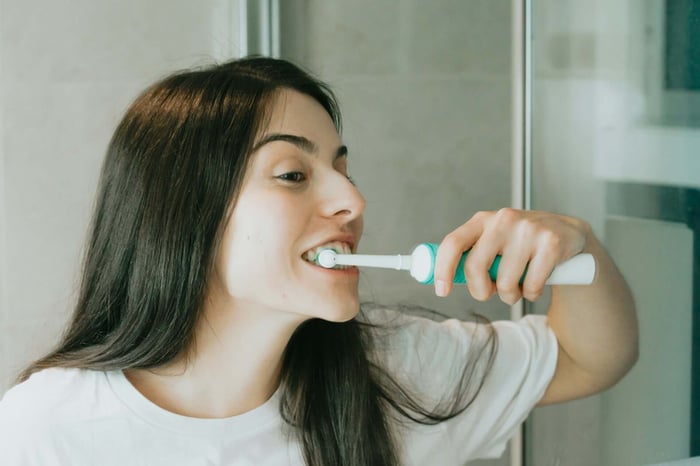
Dental implants are cleaned like natural teeth: brushing twice a day, flossing, and using a water flosser around the implant base if recommended by your dentist. There is no need to remove anything at night. Implant-supported removable overdentures combine both routines; you take the denture out to soak and clean it, then clean the implant posts and your gums separately.
Repairs, Relines, and Replacement Timelines
Dentures can crack or break if dropped, and their fit can drift as the jaw changes shape. Relining, in which the dentist adds new material to the inside of the denture to improve the fit, helps extend its usefulness. Most dentures last five to eight years before full replacement is needed, though some patients require adjustments sooner.
Implant components are more durable but not indestructible. The crown attached to an implant post can chip or wear over time, typically after ten or more years of use. The titanium post itself, once fully integrated, rarely needs replacement in healthy patients.
Implant-supported dentures sit somewhere in between: the posts are durable, but the denture portion still requires the same kind of relining and eventual replacement as a conventional one.
At your Santa Barbara appointment, the clinical team can review your current gum tissue health and bone density, which directly affects which maintenance path is realistic for you. Knowing what kind of upkeep fits your lifestyle is just as important as the upfront treatment decision, and that information also shapes the financial picture.
Budget, Candidacy, and Decision Factors
Cost is one of the first things people ask about, and the honest answer is that it depends on more factors than a single price point can capture.
What Shapes the Overall Cost Range
Traditional dentures have a lower upfront cost, making them accessible to patients who need to act quickly or are working within a tight budget. Implants cost significantly more upfront, but when you factor in the relining, adjustments, and replacement cycles that come with dentures over 10 or 20 years, the long-term cost difference narrows considerably.
In many cases, implants become the more cost-effective option over a longer horizon. The number of teeth being replaced, the materials chosen, whether bone grafting is needed, and the complexity of your case all affect the final cost for either option.
When Jaw Health or Medical History Changes the Best Fit
Not everyone is an immediate candidate for implants. Sufficient bone density is required to securely hold the implant post. Patients with significant bone loss may need a bone graft first, adding time and cost to the process.
Certain medical conditions that affect healing, such as uncontrolled diabetes or the use of certain medications, can also complicate implant placement and will be reviewed thoroughly before any plan is made.
Because they do not involve surgery, traditional dentures are suitable for a wider range of health conditions. They are often the recommended starting point for patients who cannot undergo surgery or who need an interim solution while they consider longer-term options.
Good implant candidates: adequate bone density, non-smoker or willing to quit, stable overall health, commitment to aftercare
Dentures may be the better fit when: bone loss is advanced, surgery is not an option medically, budget requires lower upfront cost, or an immediate solution is needed
How Financing Can Make Treatment More Manageable
Sticker shock on implants is real, and many patients assume that rules them out. Flexible financing options can spread the cost of implants over time to fit a monthly budget, rather than requiring the full amount upfront. Some patients find that a monthly payment for implants is comparable to what they would spend on denture adhesive, relining, and replacements over the same period.
Asking about financing at your consultation is completely normal, and a good dental team will walk through the numbers with you honestly so you can make a decision that works financially as well as clinically.
Frequently Asked Questions
How do Dentures and Implants Compare for Chewing Comfort and Speaking Clearly Day-to-Day?
Implants generally allow for more natural chewing because they are anchored in the jaw and do not shift under pressure. Traditional dentures take several weeks to adjust to and may temporarily affect speech, while implants and implant-supported dentures typically restore function much closer to that of natural teeth.
What Are the Typical Total Costs Over Time for Dentures Versus Implants, Including Repairs and Relines?
Dentures have a lower upfront cost but require more ongoing expenses for relines, adhesives, and full replacements every 5 to 8 years. Implants cost more initially but tend to require less maintenance over time, making the twenty-year total cost often comparable to or lower than for other options in many patients.
Which Option Tends to Feel More Natural and Secure When You Are Out and About in Santa Barbara?
Implants are widely regarded as the more secure option for active daily life, from meals on State Street to outdoor activities in the hills above town. They do not shift, do not require adhesive, and allow patients to eat and speak without thinking about their restoration.
Are Implants a Good Fit for Older Adults, and What Health Factors Can Make Them Easier or Harder to Manage?
Age alone is not a disqualifier for implants; overall health and bone density matter more. Many adults in their seventies and beyond receive implants successfully. Conditions such as uncontrolled blood sugar, certain blood thinners, or advanced bone loss may require additional steps before placement is possible, all of which your dentist will review at your consultation.
What Is the Difference Between Snap-In Dentures and Traditional Dentures, and Who Is a Good Candidate?
Snap-in dentures (also called overdentures) attach to two or more implant posts rather than resting freely on the gum. They are removable at home for cleaning but far more stable during the day than traditional dentures. They are a strong option for patients who want more security than a conventional denture provides but are replacing a full arch rather than individual teeth.
If I Am Missing Several Teeth, How Do Dentures, Implants, and a Dental Bridge Compare for Function and Upkeep?
A bridge works well for a small gap of one to three teeth but requires altering the adjacent healthy teeth to serve as anchors. Partial dentures cover larger gaps without surgery but may stress neighboring teeth over time. Implants for multiple teeth avoid both of those trade-offs, preserving adjacent teeth and stimulating the bone, though the process takes longer and costs more upfront.
Your Next Step Toward a Confident Smile
The right tooth replacement is the one that fits your jaw health, your lifestyle, and your budget, not the one that sounds best in a general article. Both conventional dentures and dental implants can meaningfully restore your smile; the difference lies in how they feel over the long term and what your specific oral health allows.
If you are weighing these options and want a clear picture of what makes sense for your situation, a consultation is the most useful next step. At See Me Smile Dental and Orthodontics in Santa Barbara, the team is straightforward about what each option involves, what to realistically expect, and how to make treatment financially workable.
You can schedule a consultation by calling the office or submitting an appointment request online. Walking in informed, which you now are, makes that first conversation a lot easier.